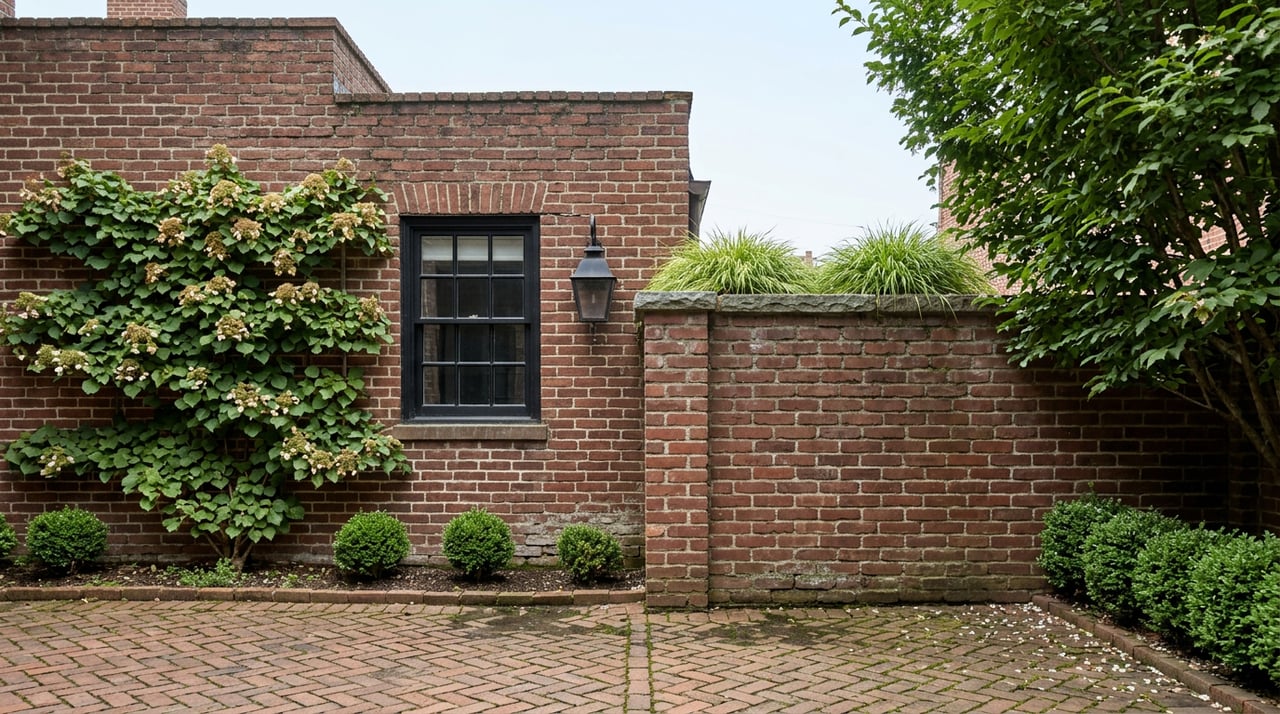
A buyer closes on a house two blocks from the Guilford Green. The plan is simple: swap the vinyl windows for something more in keeping with the house, maybe add a small dormer over the kitchen for more light. Then the contractor mentions a name the buyer has never heard before closing: the Historic District Commission. Nothing visible from the street can change, inside the Guilford Town Center Historic District or the Whitfield Street Historic District, without a Certificate of Appropriateness first. That review is not optional and it is not the same process as a standard building permit.
Nobody mentioned this at the open house because the listing sheet does not mention it. The median price for the town does not mention it either. That is the problem with treating Guilford as one housing market with one number attached to it. The town-wide median blends a historic district governed by architectural review, a freshwater lake with permanently fixed shoreline supply, and a string of century-old private beach associations that still run their own affairs. Each has a different mechanism deciding what a dollar buys, and none of those mechanisms shows up in a Zestimate.
The Certificate Nobody Mentioned at the Open House
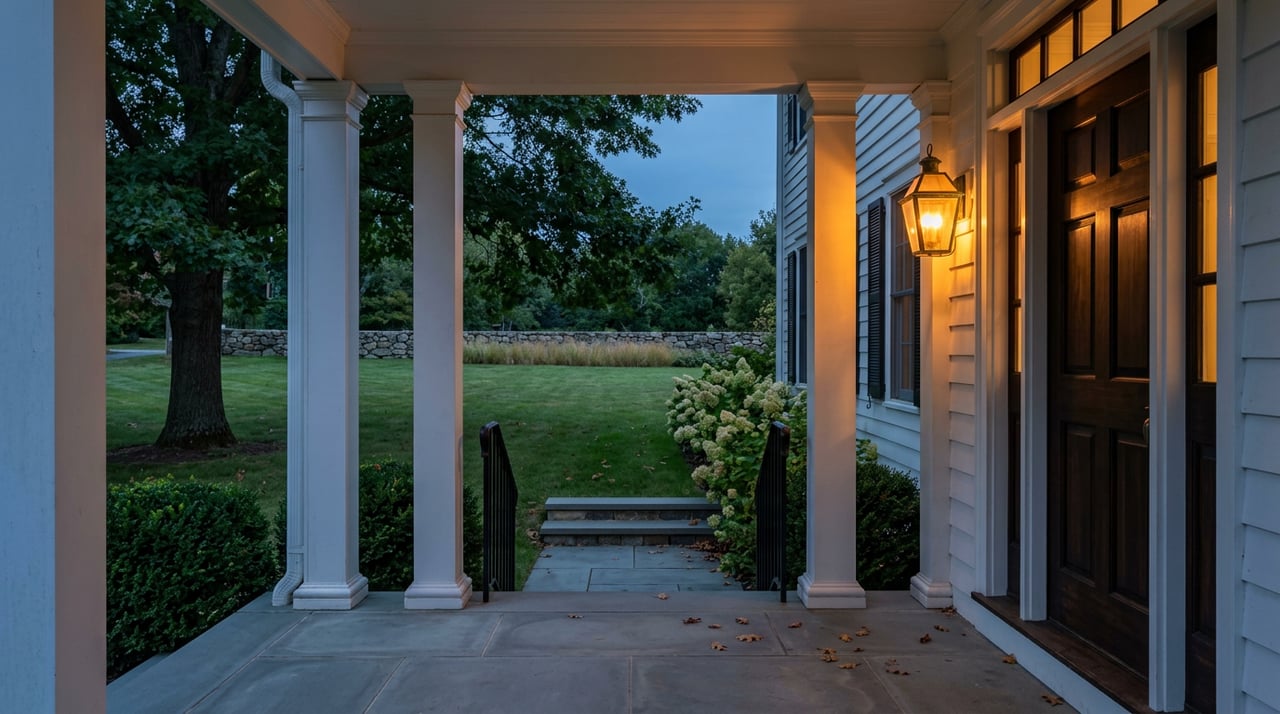
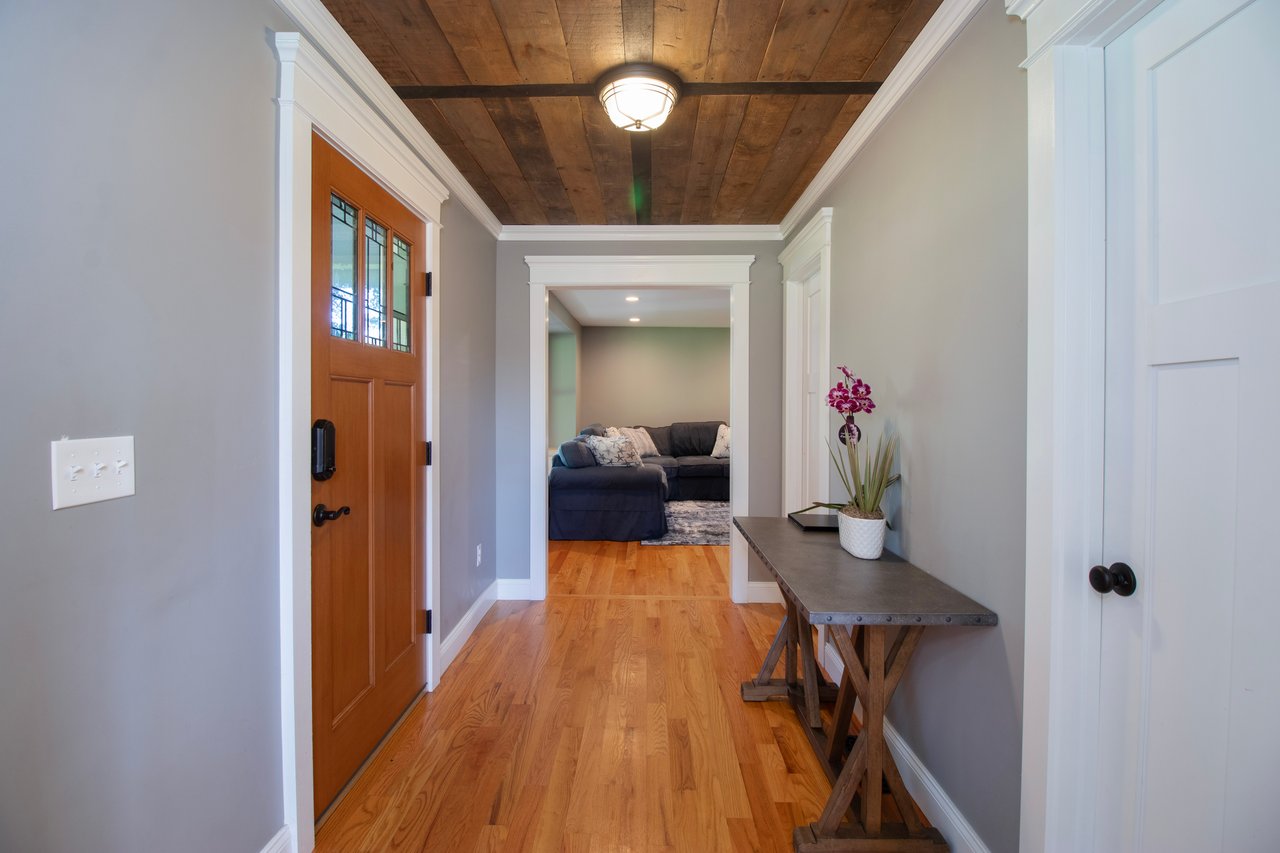
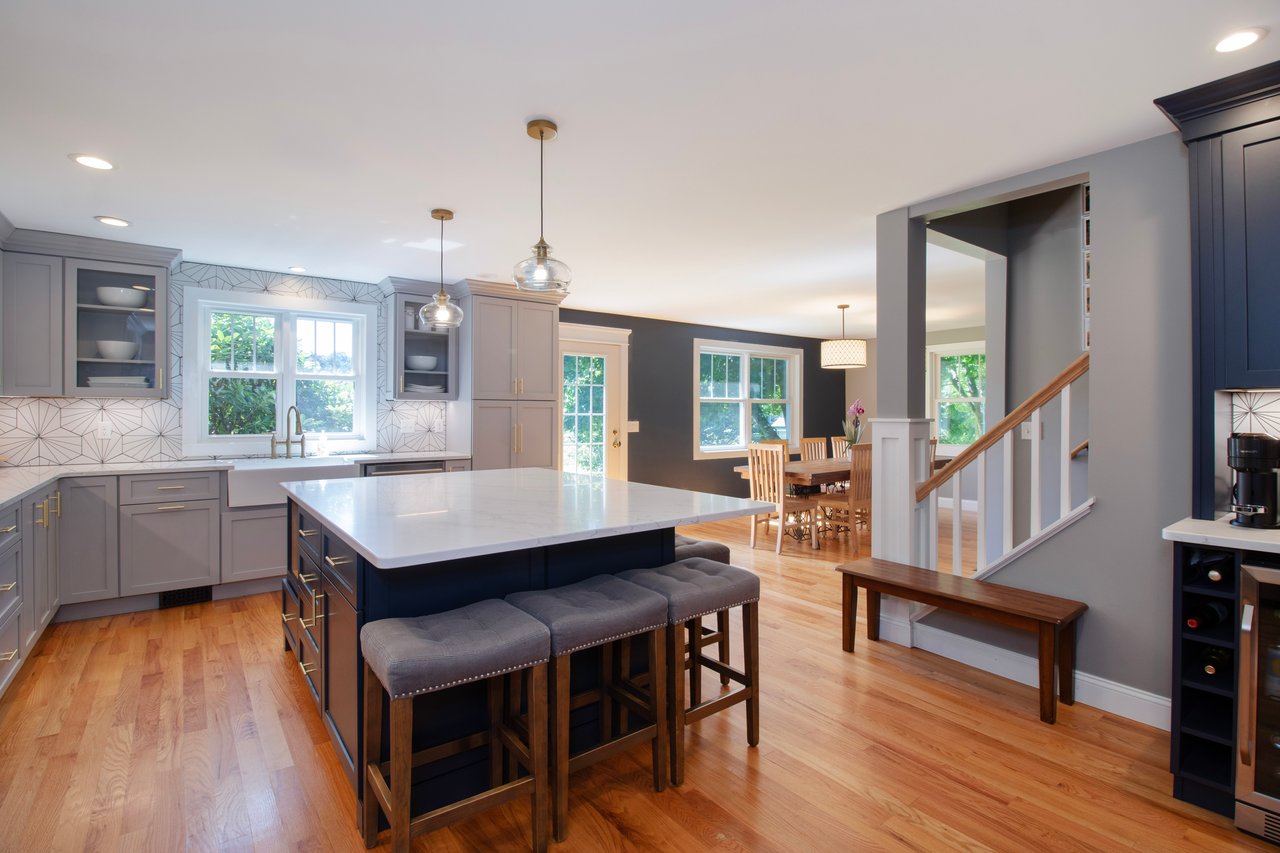
Guilford has operated two local historic districts since 1987, amended in 2001: the Guilford Town Center Historic District and the Whitfield Street Historic District, covering roughly 226 buildings in the downtown area. Inside either boundary, a property owner needs a Certificate of Appropriateness from the town's Historic District Commission before altering or erecting anything with an exterior visible from a street. That covers windows, siding, additions, even fencing in some cases. It does not cover interior renovation, which is why so many of the antique homes near the Green have thoroughly modern kitchens behind a facade that has not changed since the Federal or Greek Revival era.
The clearest proof that this system produces real housing, not just red tape, sits at 18 Fair Street. The building started as the I. S. Spencer & Sons Foundry, a cast iron works from 1869. In 1988 the original foundry building and a new six-unit addition became a 12-unit condominium complex now known as The Foundry, with exposed brick, timber beams, and 10-foot ceilings preserved inside units that still read as a 19th century mill from the sidewalk. A few blocks away, the Chittenden Building at 66 High Street shows the newer version of the same pattern: a small luxury condominium building finished in 2023, overlooking the salt marsh and Long Island Sound, built within the same review framework. Downtown Guilford adds housing by converting what already exists, not by tearing it down.
This summer brought a real change to how that process works, but not the change a downtown buyer might hope for. Effective July 15, 2026, the Town of Guilford's Planning & Zoning Department stopped requiring a separate, pre-approved Zoning Permit before a Building Permit application. Projects still get a zoning review, it just happens inside the Building Permit process now instead of as its own upfront step. That is a genuine simplification, and it applies town-wide. It does nothing to the Historic District Commission's separate Certificate of Appropriateness requirement, because that review answers to a different statute entirely. A buyer near the Green got a shorter path to a building permit this year. They did not get a shorter path to changing anything a passerby can see.
The Road That Fixed Lake Quonnipaug's Supply Before You Were Born
Lake Quonnipaug covers 41 acres in Guilford's interior, with a town beach and swimming access on its western shore. That western shore also happens to run along Route 77, which parallels the lake closely enough that it precludes residential development along that side entirely. The eastern shore, without a state road in the way, is the one that carries the lake's houses.
That single fact does more to explain lakefront pricing on Quonnipaug than any market report will. The number of lots that will ever have direct lakefront access on this lake was decided by where a road was laid, not by anything happening in today's market. There is no zoning amendment, no future development proposal, no shift in buyer demand that adds lakefront supply to the western shore. The road already owns it. Compare that to downtown, where a mill building can still become condominiums within the historic district's rules. Lake Quonnipaug has no equivalent lever. Its supply is closed.
For a buyer comparing a Quonnipaug lakefront listing to something inland in North Guilford, that difference matters more than the current asking price. An inland Colonial's price reflects today's buyers and today's rates. A lakefront lot's price reflects a scarcity that was locked in decades ago and will still be locked in decades from now.
The Private Governments at the Water's Edge
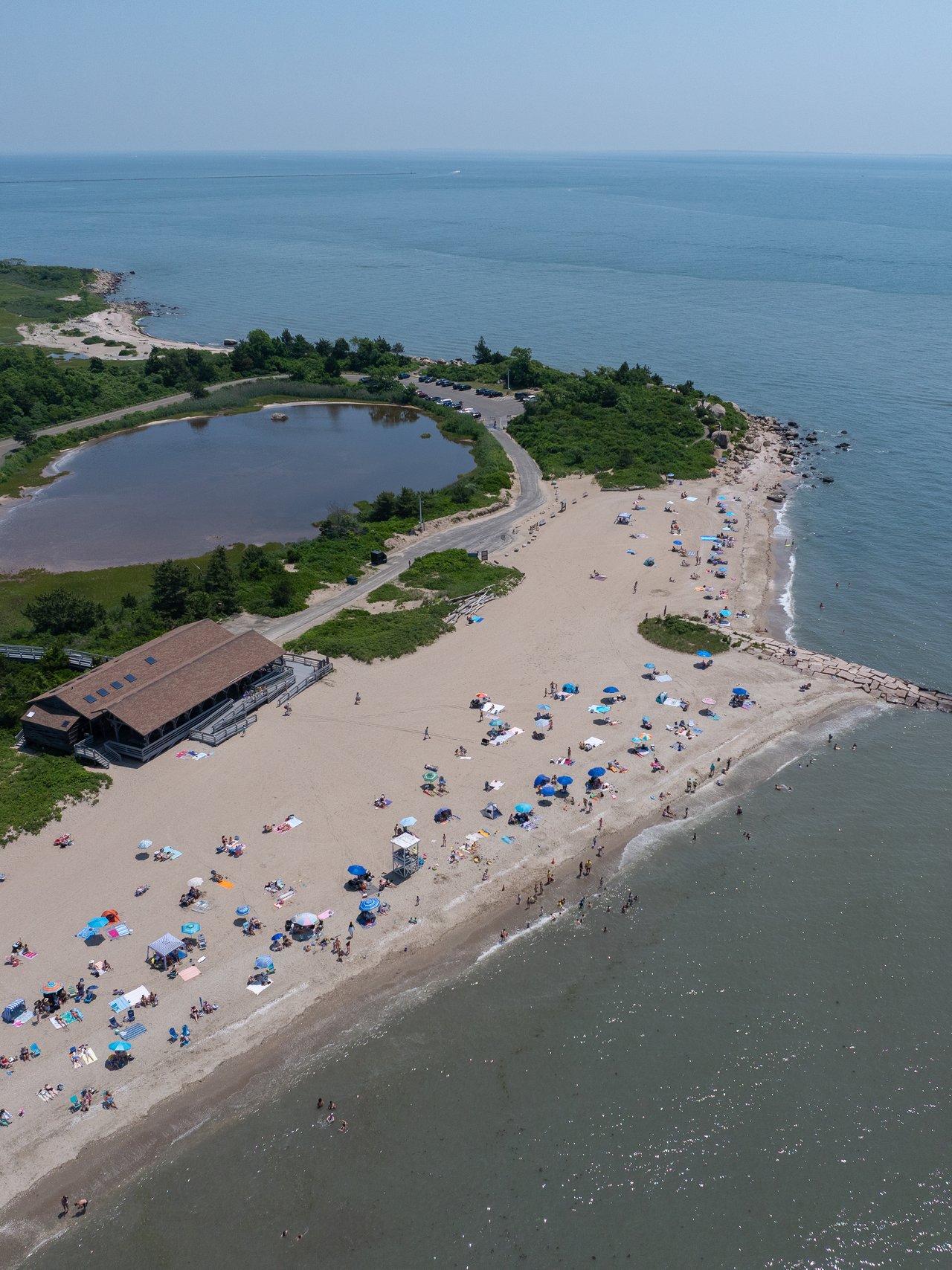
Guilford's shoreline carries a third kind of market entirely, one governed by neither the town's zoning commission nor a state road but by private associations that predate most of the town's current planning apparatus. Sachem's Head, the Mulberry Point Beach Association, and Indian Cove all started as summer colonies and are now largely year-round neighborhoods, but each still maintains its own private beach for its members rather than relying on town-run shoreline access.
There is a physical cost that comes with that history, and it rarely shows up in a standard inspection. Flat lots at Sachem's Head, Mulberry Point, and Bishop's Beach share a drainage problem tied to their geography: no natural downhill path for rainwater to follow, and a water table that sits close to the surface because of the surrounding tidal wetlands, worst in spring. Local contractors who work these neighborhoods regularly install catch basins, French drains, and dry wells specifically because these lots hold standing water after storms in a way that an inland Guilford lot on sloped ground simply does not. A buyer weighing a shorefront association property against a comparable house in town needs to ask about association membership on one hand and site drainage history on the other, neither of which appears in a comparison built purely on price per square foot.
Why One Median Can't Describe Any of This
Pull a few different sources on Guilford's home prices right now and they will not agree, and that disagreement is itself informative. Zillow's home value index puts the typical Guilford home at roughly $531,000, up 6.2% over the past year. Movoto tracked a median sold price of $749,900 for Guilford in March 2026. A separate analysis of Q1 2026 closings put the median sale price at $575,000, up 8.5% year over year, but built on only 23 recorded transactions for the quarter, a 56.6% drop in sales volume from the same period the year before.
Part of that spread comes from measuring different things: typical value versus asking price versus closed sale price, on different time windows. But part of it is exactly what this piece has been describing. A median built from a quarter with only 23 closings is going to swing wildly depending on whether those 23 sales happened to include a historic district conversion, a lakefront property on the developable shore, or a shorefront association house that needed a new dry well before it could close. Guilford's own affiliated brokerage network described this pattern directly in its 2026 market reporting: single-family sales got off to a slow start in the first quarter even as buyer demand kept surging and new listings traded quickly, and by the second quarter, closed dollar volume across many Connecticut markets had caught up to and passed the first half of 2025, even though unit sales for the year were still running behind. Rising dollar volume on falling unit counts is what a market looks like when the sales that do close skew toward higher-priced, structurally distinct properties, which is precisely what happens when the three markets inside Guilford take turns dominating a thin quarter.
Three Markets, Three Questions
| Submarket | What actually controls supply | The question to ask before writing an offer |
|---|---|---|
| Downtown / historic district | Certificate of Appropriateness from the Historic District Commission | Can I legally make the exterior change I'm picturing, and how long does that review take |
| Lake Quonnipaug | Route 77 along the western shore | Which shore is this lot on, and does that ever change |
| Shorefront associations (Sachem's Head, Mulberry Point, Indian Cove) | Private association bylaws and flat-lot drainage | What are the dues, and has this specific lot held standing water after a storm |
None of these questions come up in a portal search filtered by price and bedroom count. They come up when someone who works this market walks a specific property with a specific set of rules in mind.
That buyer near the Green eventually got the Certificate of Appropriateness approved, with a modified dormer design that satisfied the commission without changing the timeline as much as feared. The lesson was not that Guilford is a difficult place to buy. It is that Guilford is not one place at all, and the sooner a buyer knows which of its markets they are actually standing in, the fewer surprises show up after the closing.
If you are comparing a listing near the Green, a lot on Lake Quonnipaug, or a house inside one of Guilford's shorefront associations, Jules G. Etes can walk you through which rules actually apply before you write an offer. Request a free home valuation to start the conversation.