Thinking about buying a historic home in Guilford? You are not alone, and for good reason. In a town where historic houses are a meaningful part of the housing landscape, buying one can feel exciting, inspiring, and a little more complex than buying a newer property. This guide will help you understand what makes Guilford’s older homes unique, where preservation rules may come into play, and how to plan your inspections, financing, and renovation ideas with confidence. Let’s dive in.
Why Guilford Stands Out for Historic Homes
Guilford has a remarkably deep inventory of older homes. According to the town’s tourism guide, more than 675 dwellings predate 1911, and more than 450 historic houses date from the 17th through 19th centuries. In practical terms, that means historic character is not a small niche here. It is woven into the town’s housing stock.
That matters when you start your home search. In Guilford, you are more likely to come across properties with original architectural details, older building materials, and preservation considerations that can shape both your purchase strategy and your renovation plans.
What Historic Home Styles You May See
Guilford’s district materials point to several architectural styles that buyers are likely to encounter, especially near the older core of town.
Colonial and Georgian Homes
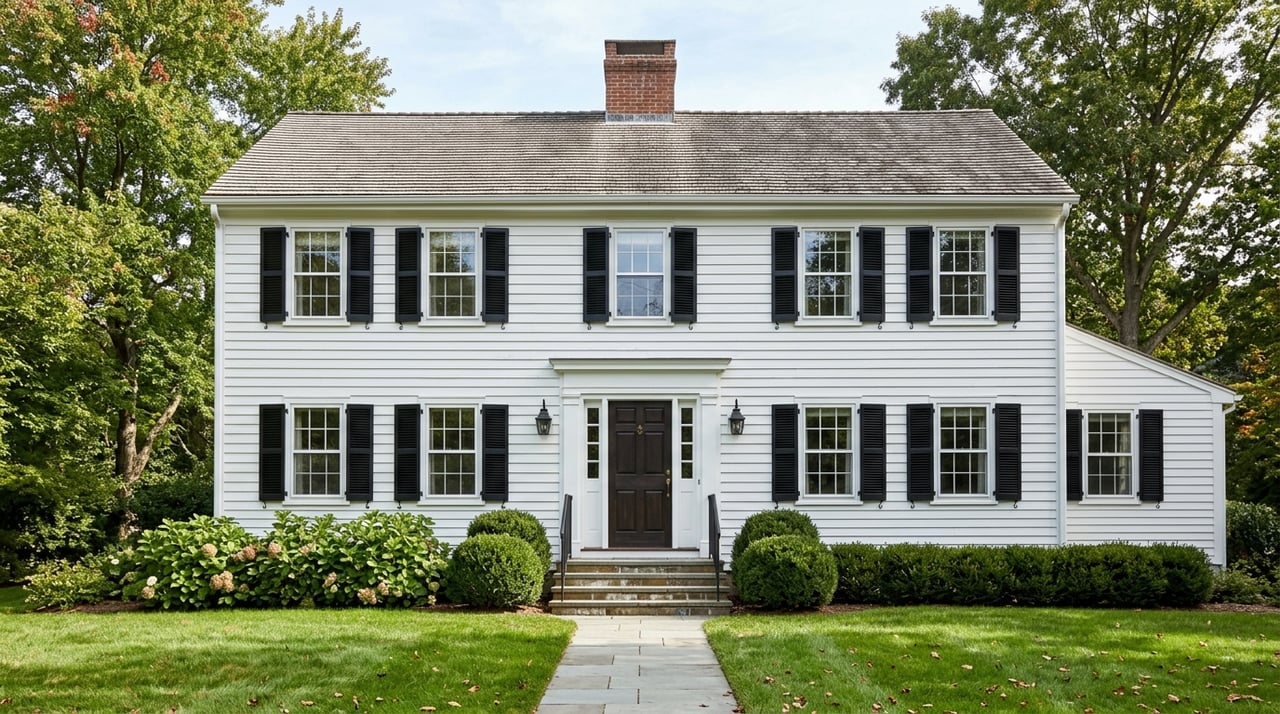
Many of Guilford’s earliest homes reflect Colonial and Georgian design. You may notice small-paned windows, symmetrical front facades, side-gabled roofs, and central chimneys. These homes often appeal to buyers who value proportion, craftsmanship, and classic New England character.
Federal and Greek Revival Homes
Mid-19th-century homes in Guilford often show Federal and Greek Revival influences. Common features include 6-over-6 sash windows, narrow clapboards, and pedimented front gables. In the Town Center Historic District, late Colonial and Federal styles are especially common.
Vernacular and Victorian-Era Properties
In areas such as the Route 146 and Leetes Island Road district, the housing mix extends beyond early Colonial forms to include late-19th- and early-20th-century Victorian properties and simpler vernacular buildings. These homes can offer a blend of period charm and slightly more flexible layouts, depending on the property.
Why Original Details Matter
When you buy a historic home in Guilford, original features are more than visual charm. The town’s historic-district guidelines treat elements like window proportions, wood clapboards, porches, chimneys, and rooflines as character-defining features.
For you as a buyer, that means cosmetic changes are not always simple upgrades. If a property is in a local historic district, visible exterior changes may be reviewed for how well they fit the home’s period and the surrounding streetscape.
Know the Difference Between Local and National Historic Status
One of the most important things to understand before you buy is that not all historic designations work the same way.
National Register Status
In Guilford, National Register listing is honorary. By itself, it does not restrict a private owner’s rights.
Local Historic District Status
Local historic district status is different. Guilford’s local historic districts are the Town Center Historic District and the Whitfield Street Historic District. If a home is in one of these districts, exterior changes visible from a public street, way, or place may require review by the Historic District Commission.
This is a critical distinction to confirm early, ideally before you finalize your offer strategy. A home can be historically significant without triggering local review, and that difference can affect both your timeline and your renovation plans.
What Changes May Need Approval
If you are buying in one of Guilford’s local historic districts, it is smart to assume that exterior work deserves a closer look before you make plans.
No building permit for an exterior alteration, and no demolition permit, may be issued until a Certificate of Appropriateness has been granted where required. The commission may also review parking changes and many visible exterior features.
Ordinary maintenance or repair that does not change the appearance of an exterior feature is exempt. Still, if your project involves changing materials, altering the look of windows or doors, building an addition, or removing a visible feature, you should verify the approval path before closing.
Documents You May Need
The commission can request supporting materials such as:
- Drawings
- Photographs
- Material descriptions
- Other documents needed to evaluate the application
That means your renovation budget should include not just construction costs, but also time for planning and documentation.
Why Pre-Application Meetings Can Help
Guilford offers optional pre-application meetings with the Historic District Commission. These meetings let you discuss scope, appropriateness, and the documentation your project may need before you formally file.
For buyers, this can be especially helpful if you are considering a property because of its renovation potential. You can test assumptions early and avoid discovering too late that a major exterior change may require a different approach.
Once a formal application is filed, the commission must act within 65 days of the public hearing date. The optional pre-application meeting does not start that review clock, so it is wise to build extra time into your project schedule.
Plan Carefully for Solar, Additions, and Exterior Features
Historic homes and modern upgrades can absolutely work together, but the fit matters.
Solar Panels in Guilford Historic Districts
Guilford’s solar guidelines require a Certificate of Appropriateness for solar installations that are visible from a public street or right-of-way. The guidelines favor low-profile, reversible systems placed on rear or side roofs, non-historic additions, or inconspicuous ground-mounted locations.
The town’s guidance also says solar applications should not be denied unless the system cannot be installed without substantially impairing the district’s historic character and appearance. That is helpful for buyers who want energy improvements, but placement and design still matter.
Additions, Fences, Walls, and Signs
The district rules also emphasize compatible scale, materials, and placement for additions, fences, walls, signs, and parking areas. If your dream property comes with plans for a new garage, larger rear addition, or reworked outdoor layout, review should be part of your purchase planning from day one.
Demolition Rules Are Not a Small Detail
If you are considering a property that needs extensive work, do not treat demolition as a simple backup plan. In Guilford’s local historic districts, demolition is heavily conditioned.
The rules require documentation before partial or full demolition, and the town’s ordinance provides a 90-day delay after a demolition permit is issued for historically significant buildings while alternatives are explored. For a buyer, that means a tear-down or major removal plan can become a regulated process rather than a quick design decision.
Inspection Priorities for Older Guilford Homes
A historic home inspection should go beyond surface-level updates. You want to understand how the building has aged, how it handles moisture, and which original features can likely be repaired instead of replaced.
Moisture and Drainage
Moisture management should be high on your checklist. Guidance cited in the research notes that clogged or broken downspouts can oversaturate the ground around a foundation, which can lead to damp basements and deterioration of masonry and adjacent wood.
Guilford’s district guidelines also note decay risks near rooflines, ground level, mortar joints, and windowsills. Since foundations in the local historic district are predominantly brick or stone, it is especially important to evaluate drainage, roof runoff, and signs of ongoing water intrusion.
Windows, Doors, and Porches
Historic windows and doors are often repair-first items. Guidance in the research recommends considering weatherstripping, glazing repair, storm windows, caulking, and related preservation work before replacement.
In Guilford, original sash patterns, door surrounds, and porch details are part of what give these homes their identity. If you love a home for its character, preserving these features may also help you protect its long-term value and visual integrity.
Lead-Based Paint Due Diligence
If the home was built before 1978, lead-based paint should be part of your due diligence. Buyers of most housing built before 1978 have the right to know about known lead-based paint hazards before signing, and buyers receive a 10-day window to arrange an inspection or risk assessment.
The research also notes that lead-based paint is especially common in older housing stock. If renovation work will disturb painted surfaces, plan carefully and use lead-safe certified contractors where appropriate.
Financing and Tax Credit Options to Explore
Historic homes often need a more thoughtful financing strategy, especially if updates are part of the plan.
Connecticut Historic Homes Rehabilitation Tax Credit
Connecticut offers a Historic Homes Rehabilitation Tax Credit for eligible homeowners and nonprofit housing corporations. To qualify as a homeowner, you must be a Connecticut taxpayer, at least one unit must be your primary residence, the home must be used as living space, mixed-use properties are not eligible, and a minimum of $15,000 in historic rehabilitation expenditures is required.
Eligible homeowners may receive a voucher worth 30% of rehabilitation costs, up to $30,000, if the home is listed individually or as a contributing resource on the State or National Register of Historic Places. If you are buying a qualifying home, this can be a meaningful part of your renovation budget.
Federal Incentive for Income-Producing Properties
The research also notes a 20% federal historic preservation tax incentive for qualifying historic rehabilitation projects, generally for income-producing certified historic structures. This may be relevant if you are considering a property that will be used as an income-producing asset rather than solely as your primary residence.
FHA 203(k) Financing
HUD’s 203(k) program can help buyers bundle purchase and rehabilitation costs into one mortgage for a home that is at least one year old. The Limited 203(k) can finance up to $75,000 for minor, non-structural repairs and improvements, while the Standard 203(k) is designed for major rehabilitation and requires at least $5,000 in rehab costs.
The Standard option also uses a HUD-approved consultant, while consultant oversight is optional for the Limited version. For buyers looking at historic homes with deferred maintenance or value-add potential, this can be a practical path to consider.
A Smart Buying Strategy for Guilford Historic Homes
The best approach is to treat preservation review, repair scope, lead risk, and financing as part of the buying decision, not as items to sort out after closing. That means asking the right questions early, reviewing district status, and understanding what the home may need in both the short and long term.
A historic home can be incredibly rewarding to own, but the right purchase is usually the one where charm and practicality line up. With a clear plan, strong due diligence, and the right local guidance, you can move forward with more confidence and fewer surprises.
If you are considering a historic home in Guilford and want clear guidance on value, renovation potential, and how to structure a smart offer, connect with Jules G. Etes . She can help you navigate the process with local insight, 203(k) familiarity, and practical renovation advisory.
FAQs
What should you check first when buying a historic home in Guilford?
- Start by confirming the home’s historic status, whether it is in the Town Center Historic District or Whitfield Street Historic District, and what repairs or exterior changes may need approval.
What is the difference between National Register and local historic district status in Guilford?
- National Register status is honorary and does not itself restrict a private owner’s rights, while Guilford local historic district status can require Historic District Commission review for visible exterior changes.
What exterior work may need approval for a Guilford historic home?
- In Guilford’s local historic districts, exterior alterations, demolition, and some other visible changes such as parking-related changes may require a Certificate of Appropriateness before permits can be issued.
What inspection issues matter most in older Guilford homes?
- Moisture management, roof drainage, foundation condition, masonry, windows, doors, porches, and possible lead-based paint hazards are all important due diligence items.
Can you add solar panels to a historic home in Guilford?
- Yes, but if the installation is visible from a public street or right-of-way in a local historic district, it generally requires review, and the design should be low-profile and placed as inconspicuously as possible.
Are there tax credits for restoring a historic home in Connecticut?
- Connecticut offers a Historic Homes Rehabilitation Tax Credit for eligible homeowners on qualifying properties, with a voucher worth 30% of rehabilitation costs up to $30,000, subject to program requirements.
Can FHA 203(k) financing help you buy and renovate an older Guilford house?
- Yes, HUD’s 203(k) program can bundle purchase and rehab costs for eligible homes that are at least one year old, with different options for lighter versus major renovation work.